
Bounce Ball Reflex Arcade
Reviews
Bounce Ball Reflex Arcade removes everything except the core loop: keep the ball from falling. That focus works in its favor. The gradual speed increase provides a clear difficulty curve, and the lack of points or levels means every run is a direct measure of concentration. The minimalist design suits short sessions, though players seeking progression systems or varied mechanics will find it limited. It is best for those who enjoy pure reaction-based challenges.
About this game
What You Actually Do
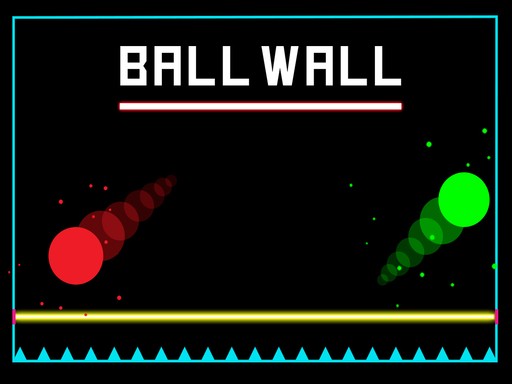
Bounce Ball Reflex Arcade strips the brick-breaker formula down to its most basic loop. There are no bricks to clear, no power-ups to collect, and no score to chase. A ball moves around the screen, and you control a platform along the bottom edge. Each time the ball descends, you must position the platform under it to bounce it back upward. The only fail state is letting the ball fall past the platform. That single rule defines every session, whether it lasts a few seconds or several minutes.
Why Speed Changes Everything
The ball does not maintain a constant pace. Its speed increases gradually with each bounce, so the same action that felt manageable at the start becomes progressively harder. You are not learning new mechanics as you play; you are applying the same mechanic under rising pressure. This design choice means improvement comes from sharper anticipation and steadier hands rather than from unlocking anything. The game ends when your reaction time can no longer keep up, which gives every run a clear, honest endpoint.
Controls and Input
Slide the platform left and right using a mouse or a finger, depending on your device. There is no button to press, no jump, and no secondary action. The entire control scheme is horizontal movement, which keeps the barrier to entry low. Because input is continuous rather than discrete, small adjustments matter. Overcorrecting or hesitating both cost you the ball, so the game rewards smooth, deliberate movement rather than frantic swipes.
Who This Suits
The minimalist presentation removes visual clutter, which helps you track the ball without distraction. Sessions can be as short as a single attempt or as long as you can sustain focus, making it suitable for quick breaks. The rising difficulty curve gives practiced players a reason to return, while the lack of complex systems means newcomers can start immediately. It is a concentration exercise as much as a game, and it works best for players who enjoy incremental self-improvement over narrative or progression systems.
Compatibility
FAQ
Comments
Sign in to leave a review
No comments yet.






Editorial Notes