
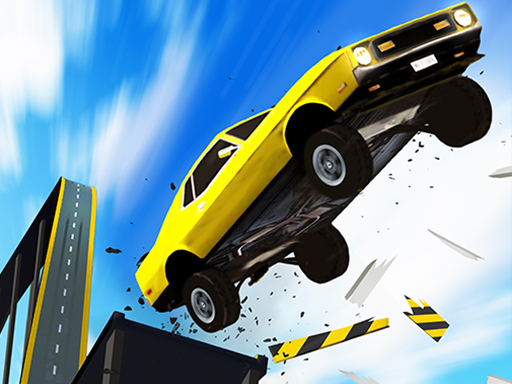
Stunt Car Driving Arcade
Reviews
Stunt Car Driving Arcade targets players who want short, uncomplicated racing sessions. Its mix of seaside, city, desert, and mountain tracks provides visual variety, while the choice between muscle cars, jeeps, and extreme racers adds replay value. The easy and professional modes accommodate different skill levels. However, the game's depth is limited to checkpoint collection and obstacle avoidance, so players seeking extensive customization or narrative may find it thin. It works best as a casual time-filler.
About this game
Track Environments and Objectives
Stunt Car Driving Arcade places players on tracks that wind through seaside routes, city streets, deserts, and mountain paths. Each environment presents its own layout of ramps, sharp turns, and obstacles. The goal on every track is to reach the finish while collecting checkpoints that unlock progress. Missing a checkpoint or hitting an obstacle can end a run, so the route itself becomes a puzzle of timing and positioning. The variety of settings keeps visual repetition low, though the core task—drive, jump, collect—remains consistent across all locations.
Vehicle Choices and Handling
Before each run, players pick from a selection of stunt cars including muscle cars, jeeps, and extreme racers. Each type changes how the car feels: some favor speed and acceleration, while others handle rough terrain or tight turns more predictably. The game pairs smooth steering and acceleration controls with engine physics and sound effects to give each vehicle a distinct weight. Because the same tracks can be approached with different cars, experimenting with the roster is a practical way to find a setup that suits a particular route's demands.
Controls, Difficulty, and Camera Use
Driving relies on managing speed and steering while using boosts to clear large gaps or maintain momentum over ramps. Balancing acceleration on steep inclines prevents rollovers or stalls. Two difficulty modes—easy and professional—let players adjust the challenge; easy mode is better for learning track layouts and car behavior, while professional mode demands more precise timing. Multiple camera angles are available, and switching views can make tricky sections easier to read, especially when judging jump distances or approaching blind turns.
Compatibility
FAQ
Comments
Sign in to leave a review
No comments yet.




Editorial Notes