

Mini Math Strategy Challenge
Reviews
Mini Math Strategy Challenge succeeds by integrating arithmetic into movement rather than treating it as a separate quiz. The need to match sums before each move creates genuine tactical decisions, especially when the special action could leave you short-handed. Its family-friendly design and gradual difficulty make it a solid choice for parents, teachers, or anyone wanting a light mental workout. The main limitation is that the game's appeal depends on enjoying basic math puzzles; players looking for fast-paced strategy may find the pace too deliberate.
About this game
Where Arithmetic Meets Tactics
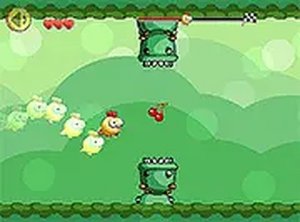
Mini Math Strategy Challenge turns simple addition into the central decision-making tool. You control a set number of characters on a map, and every move you make must total a specific sum. That requirement forces you to pause and calculate before acting. The opponent's base sits somewhere on the same map, and your job is to get your team there with the right number of characters. Because the math is baked into movement rather than presented as a separate quiz, each turn becomes a small planning exercise. [IMG_1]
Reading the Map and Moving Your Team
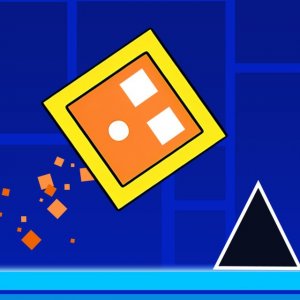
Before you touch a button, you look at the layout. Your starting position, the opponent's base, and the placement of enemy characters all matter. You select and direct your team using on-screen controls. When opponents get close, a special action lets you remove them, but that option is not unlimited in its usefulness—using it at the wrong moment can leave you short-handed for a required sum later. The core loop is straightforward: assess the board, choose a move that matches the needed total, and advance. [IMG_2]
What Makes the Puzzle Work
The difficulty comes from two sources. First, the addition itself: you need to know which combination of characters equals the target sum. Second, the spatial element: even if you know the right number, you still have to position your team so that the move is actually possible. Levels gradually introduce more complex arrangements, so the game asks you to improve both your mental arithmetic and your ability to plan a route. The special action adds a layer of timing, since clearing a path early might help movement but reduce the characters available for a later sum.
Who This Is For
This is a casual, educational game designed for all ages. There is no inappropriate content, which makes it suitable for families and classroom use. Younger players can practice addition in a low-pressure setting, while older players or adults looking for a light mental workout will find that the later levels require genuine forethought. The gentle learning curve means beginners are not overwhelmed, but the puzzle structure still offers enough depth to stay interesting.
Compatibility
FAQ
Comments
Sign in to leave a review
No comments yet.






Editorial Notes