
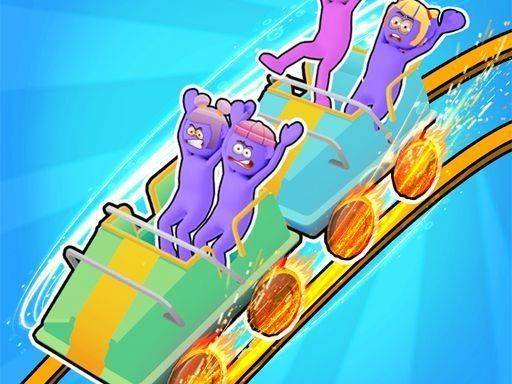
Track Runner 3D Coaster
Reviews
Track Runner 3D Coaster builds its difficulty around a single idea: momentum is always working for or against you. The two-button control scheme keeps inputs simple, so the real skill lies in reading track geometry and braking before it is too late. Early levels teach this gently; later ones chain tight corners and fast sections that demand precision. The bright, saturated visuals keep obstacles readable, and the gradual difficulty curve makes it approachable for casual sessions without removing the challenge for players who want cleaner runs.
About this game
One Goal, Two Pedals
Every course in Track Runner 3D Coaster asks the same question: can you reach the finish without wrecking the car? The controls are deliberately minimal—accelerate and brake—so the real challenge lies in reading the track ahead and deciding when to commit to speed. 
How Momentum Shapes Every Decision
The physics model runs on momentum, which means the car keeps carrying whatever speed you have built up. That single fact changes how you approach each section. A steep climb demands enough entry speed to crest the top, but arriving too fast at the following descent leaves no room to brake before the next turn. Ramps reward well-timed acceleration with brief airborne stunts, while tight corners punish anyone who treats the brake as optional. Track vibrations and wind audio act as live indicators of how stable the car currently is, so attentive players get feedback before a mistake becomes a crash.
Track Layouts and Visual Themes
No two stages share the same shape. Some layouts lean on steep climbs paired with rapid drops; others compress the challenge into sharp turns and narrow pathways. The scenery rotates between bright daytime parks and neon-lit night courses, and the saturated color palette keeps track elements clearly visible so you can plan moves in advance. Background details like trees, buildings, and sky gradients add depth without pulling attention away from the route itself.
Difficulty That Teaches Before It Tests
Early courses use forgiving layouts that let newcomers learn the acceleration and braking rhythm without constant failure. Later stages tighten the corners, raise the speed, and chain maneuvers together, demanding precise input rather than rough guesses. Because the ramp-up is gradual, the game works for short casual sessions and for players who want to push toward cleaner, faster runs on the harder tracks.
Compatibility
FAQ
Comments
Sign in to leave a review
No comments yet.


Editorial Notes