
Tile Clear Strategy
Reviews
Tile Clear Strategy focuses on deliberate placement rather than reflex. With no timer, the challenge comes from reading the board and avoiding isolated empty cells that block future shapes. Random block sets add replay value and keep pattern recognition from becoming rote. The clean interface and clear completion cues make it easy to pick up, while the planning depth can hold experienced puzzle players. It works well for short breaks or longer, thoughtful sessions.
About this game
How the Grid Clearing Works
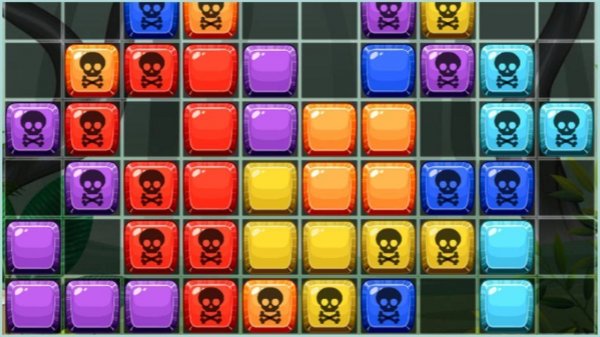
Tile Clear Strategy is built around a simple loop: a set of block shapes waits in a side panel, and you drag each one onto the main grid. Your objective is to fill entire rows or columns. When a line is completely occupied, every block in that line disappears, including any special blocks that were marked for removal. The game continues as long as there is empty space for the next shape. Once the grid is too crowded to place any remaining shape, the round ends.
No Clock, Just Planning
There is no ticking timer. You can study the board for as long as you like before committing to a placement. That relaxed pace shifts the challenge away from speed and toward foresight. Each shape you place changes the space available for later shapes, so the real difficulty lies in avoiding isolated empty cells that become hard to fill. Thinking several moves ahead is more useful than reacting to the current board.
Interface and Visual Cues
The interface is deliberately uncluttered. Rows and columns that are close to completion are marked with clear visual cues, so you can spot immediate opportunities without scanning every cell. Block sets sit in a distinct panel, making it easy to see what is available at a glance. Drag-and-drop controls respond without complex instructions, which keeps attention on the puzzle rather than the input method. The overall aesthetic stays out of the way, supporting the logic without distraction.
Random Shapes and Replay Value
Block sets are generated randomly for each session, so no two games play out the same way. That randomness gives the puzzle long-term replayability and keeps pattern recognition from turning into memorization. Regular play can sharpen spatial awareness and the ability to read a grid quickly. The rules are accessible to newcomers, but the planning depth gives experienced puzzle players something to chew on. It suits both short breaks and longer sessions.
Compatibility
FAQ
Comments
Sign in to leave a review
No comments yet.



Editorial Notes