
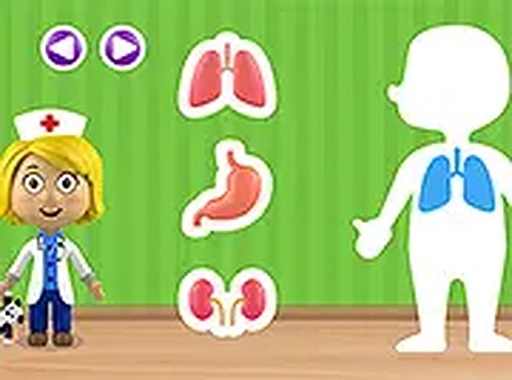
Human Anatomy Puzzle Adventure
Reviews
Human Anatomy Puzzle Adventure succeeds by narrowing its focus: one body outline, a handful of major organs, and a drag-and-drop mechanic that even very young children can operate. The lack of timers, scores, and failure states keeps the experience calm and repeatable. Its browser-only design means it works on classroom tablets and home computers without setup. The main limitation is depth — this is an introductory matching activity, not a detailed anatomy lesson. For parents and teachers seeking a safe, free, self-directed introduction to body organs, it fits the purpose cleanly.
About this game
What Players Actually Do
Human Anatomy Puzzle Adventure presents a simple body outline with empty spaces where major organs belong. Around the silhouette, colorful organ pieces wait to be placed. A child taps or clicks a piece, drags it to the matching space, and releases. A correct placement snaps the organ into position with a clear visual cue. The round ends when every organ sits in its proper location. There is no timer, no score penalty, and no failure state — just repeated matching until the body is complete.
Designed for Small Hands and Early Learners
Every interaction is built around drag-and-drop, which works equally well with a mouse or a touchscreen. The organ pieces use simple shapes and bright colors, so children can distinguish them without reading text. Because the game runs entirely in a web browser, it opens instantly on a home computer, classroom tablet, or smartphone. No installation, no account creation, and no external links interrupt the activity. A full-screen option removes browser distractions and keeps attention on the puzzle itself.
Why the Learning Sticks
Matching an organ to its correct position requires observation: a child must compare shape, size, and location before releasing the piece. That small decision — where does this piece go? — turns passive viewing into active recall. Repeating the activity strengthens memory of both organ names and their relative positions. Incorrect placements are not punished; the piece simply returns or stays available, so children can try again without frustration. The game treats mistakes as part of the process rather than a failure.
A Safe, Self-Directed Activity
There are no advertisements, no in-app purchases, and no inappropriate content. Parents and teachers can hand over the device without monitoring every click. The absence of timers or competitive scoring means children work at their own pace, which suits very young learners who need time to think. The game does not require adult assistance to operate, so it also builds a small sense of independence. It is a straightforward educational tool, not a test or a competition.
Compatibility
FAQ
Comments
Sign in to leave a review
No comments yet.



Editorial Notes