

Orbit Dash: Reflex Challenge
Reviews
Orbit Dash: Reflex Challenge delivers a focused arcade experience built on one core loop: move a sphere along a circular track, collect markers, and avoid rotating obstacles. The dual-direction control adds a layer of strategy beyond pure reaction speed. Its bright, uncluttered visuals and lack of dark imagery make it approachable for all ages. The absence of levels or checkpoints keeps sessions short and score-driven. Players who enjoy precision-based casual games will find a gentle learning curve here, though those seeking deep progression may want more structure.
About this game
Core Objective and Moment-to-Moment Play
Orbit Dash: Reflex Challenge centers on a simple goal: move a sphere along a circular track to collect glowing markers. Each marker increases your score and extends the current run. The track is not empty—obstacles rotate or shift position along the path. A single contact with any hazard ends the session immediately, so every tap or click carries weight. The loop of collecting and dodging creates a steady rhythm that rewards quick thinking and steady hands. [IMG_1]
Dual-Direction Controls
The control scheme is built for instant understanding. A tap or click moves the sphere forward along the track. A separate input reverses direction, letting you backtrack or reposition. This dual-direction system is essential because obstacles can approach from either side. Some hazards follow predictable patterns, while others change speed or trajectory mid-run. Knowing when to advance and when to retreat is the key to lasting longer. [IMG_2]
Visual Style and Approachable Atmosphere
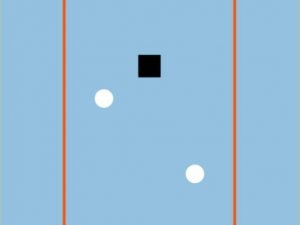
The game presents a bright, uncluttered visual environment. The circular track stands out clearly against a clean background, making it easy to track the sphere and incoming hazards. Color choices are soft and non-distracting, keeping focus on the action. The overall look is friendly and approachable, suitable for players of any age. There is no dark or intense imagery, which reinforces the family-friendly nature of the experience. [IMG_3]
Session Structure and Scoring
Each attempt is self-contained, lasting from a few seconds to several minutes depending on your skill. There are no levels or checkpoints; progress is measured purely by score. The game encourages repeated attempts to improve your personal best. Because obstacles change each round, no two sessions feel exactly the same. This structure makes it easy to pick up for a minute or two and put down without losing progress. [IMG_4]
Skill Development and Mastery
Success in Orbit Dash comes from developing two main skills: timing and pattern recognition. Beginners may rely on reaction speed, but experienced players learn to anticipate obstacle movements. The dual-direction control adds a layer of strategy, as reversing at the right moment can save a run. Over time, players build muscle memory for common obstacle sequences. The game offers a gentle learning curve that rewards practice without punishing mistakes too harshly. [IMG_5]
Compatibility
FAQ
Comments
Sign in to leave a review
No comments yet.





Editorial Notes