
Puzzle Pathway Challenge
Reviews
Puzzle Pathway Challenge stands out for its thoughtful level design and gentle difficulty curve. Each stage feels like a small discovery, with solutions that are logical yet surprising. The minimalist art style and humorous touches keep the experience light, while the puzzles themselves offer genuine mental stimulation. It is an excellent choice for anyone looking for a relaxing but engaging brain teaser that respects the player's time.
About this game
Core Puzzle Mechanics
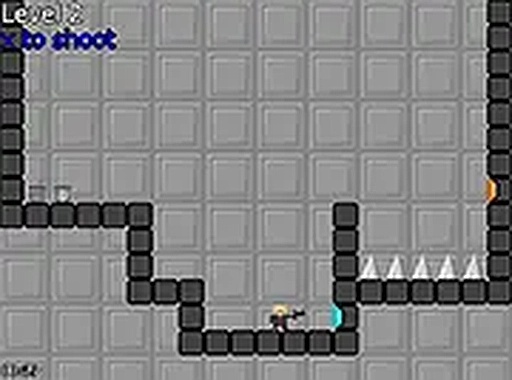
At the heart of Puzzle Pathway Challenge lies a simple but engaging loop: each level presents a closed environment where a tiny character needs to reach a designated exit point. The player interacts with objects scattered around the stage, picking them up and placing them in specific locations to alter the environment. This might mean moving a block to create a bridge, activating a switch to open a door, or combining items to produce a new effect. The game does not rely on speed or reflexes; instead, it rewards careful observation and logical deduction. Each puzzle is self-contained, with no inventory carried over between stages, keeping the focus on the current problem.
Level Design Philosophy
The puzzles are built around a core idea of misdirection and playful logic. Rather than following a predictable pattern, each stage introduces a new twist that forces the player to reconsider their assumptions. For example, an object that seems useless in one context might become essential when viewed from a different angle. The difficulty curve is gentle at first, allowing newcomers to grasp the basic interactions, but it steadily introduces more complex scenarios that require multi-step planning. The game avoids arbitrary difficulty spikes, instead ensuring that each new mechanic is taught through a simple example before being combined with others. This thoughtful pacing keeps the experience satisfying without becoming frustrating.
Visual Style and Atmosphere
The presentation is deliberately minimal, with clean lines and a bright color palette that makes each element easy to distinguish. The small character has a simple, expressive design that conveys emotion through subtle animations, adding a layer of charm to the problem-solving. Backgrounds are uncluttered, ensuring that the player's attention remains on the puzzle itself. The overall tone is light and humorous, with occasional visual gags that reward attentive players. This approachable aesthetic makes the game suitable for a wide audience, including younger players who might be intimidated by more complex puzzle titles.
Progression and Replayability
The game is structured as a linear series of stages, each unlocking the next upon completion. There are no time limits or score systems, which encourages experimentation and reduces pressure. Players can revisit any previously completed level to try alternative solutions, though each puzzle has at least one intended solution. The lack of a failure state means that every attempt is a learning opportunity, and the game gently nudges players toward creative thinking rather than punishing mistakes. This design makes it an ideal choice for short sessions, as each puzzle can be completed in a few minutes once the solution is understood.


Comments
Sign in to leave a review
No account? Create one
No comments yet.