
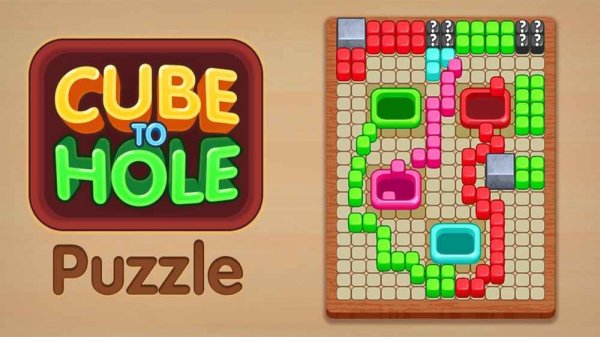
Cube Matching Logic Puzzle
Reviews
Cube Matching Logic Puzzle delivers a stripped-down logic challenge: slide colored cubes into matching holes without wasting moves. The minimalistic visuals and gradual difficulty curve make it accessible, while later layouts demand real planning. It suits players who enjoy spatial reasoning and quiet problem-solving rather than action or story. The main limitation is that the core loop stays consistent throughout, so variety comes from layout complexity rather than new mechanics.
About this game
Matching Cubes Under Pressure
Cube Matching Logic Puzzle asks a straightforward question: can you move each colored cube into its corresponding hole? The catch is that the play area is cramped and your move count is limited. You select a cube and slide it toward its target, but every slide shifts the board's dynamics. A move that solves one cube can block another, so you must read the whole layout before acting. The game tracks your moves, pushing you to find efficient sequences rather than brute-force solutions.
Why Tight Spaces Change Everything
Limited room turns a simple matching task into a spatial reasoning test. Cubes cannot pass through each other, so the order in which you place them matters as much as the destinations themselves. Early levels introduce the basic slide-and-match rhythm, while later layouts add more cubes and narrower corridors. The difficulty curve is gradual, giving you time to internalize how blocking works before the puzzles demand multi-step foresight. If you move a cube into a corner without an exit, you may need to mentally reverse your steps to recover.
Clean Visuals and Responsive Feedback
Vibrant cubes sit against minimalistic backgrounds, which keeps your attention on color distinctions and spatial relationships. Smooth animations show each cube sliding into place, and sound effects confirm correct placements. That feedback loop matters in a logic puzzle: it tells you instantly whether a move worked, so you can adjust your plan without second-guessing. The uncluttered design also makes it easy to scan the board for bottlenecks before you commit to a sequence.
Planning Over Speed
Success here comes from observation, not reflexes. Before your first move, scan for cubes in tight spots or those blocking others. Prioritize them, because freeing a blocked cube often opens the path for several others. Counting moves helps you stay within the limit and leaves room for adjustments. When you get stuck, retracing your last few steps mentally often reveals a better order. Regular practice sharpens the spatial reasoning and forward planning the game rewards.
Compatibility
FAQ
Comments
Sign in to leave a review
No comments yet.



Editorial Notes